
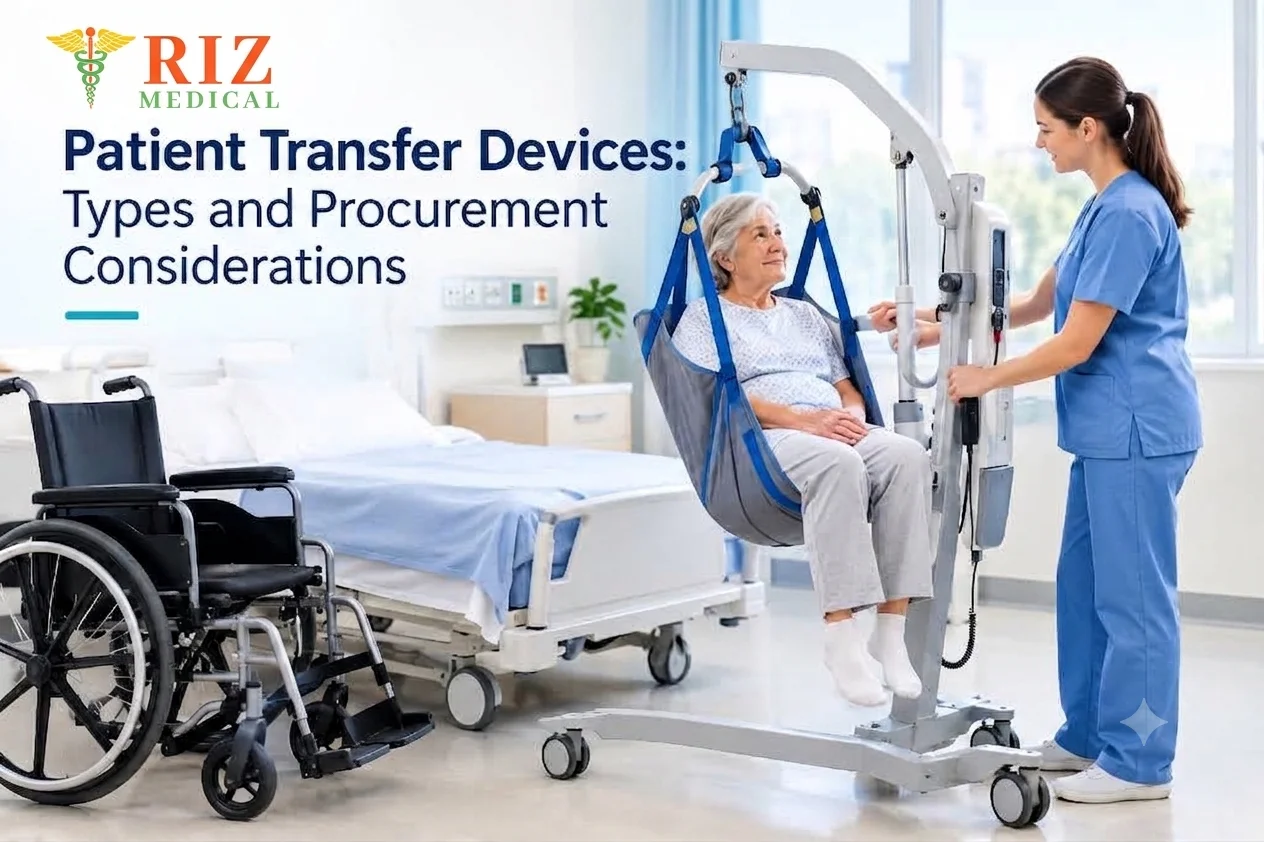
Patient Transfer Devices: Types and Procurement Considerations is an important challenge for healthcare facilities that regularly assist sufferers with movement between beds, wheelchairs, examination tables, and different clinical surfaces. Patients may also need transfers due to decreased mobility, physical weakness, injuries, or safety regulations. Healthcare experts want to pick out appropriate transfer techniques to assist the affected person’s comfort, dignity, and safe handling.
Patient transfers are a regular part of healthcare operations. Some people can perform these moves with minimal assistance, while others require specialized tools and assistance from trained caregivers. The right gadget can help improve the commercial enterprise of transfer strategies and decrease unnecessary physical strain at some stage in patient management.
Patient transfer equipment includes a few options, from transfer boards and slide sheets to mechanical patient lifts and powered sit-to-stand devices. Each type has a particular purpose, usage technique, and level of assistance. Understanding the different versions permits procurement agencies to assess devices based mostly on medical needs in the region, rather than relying solely on product cost or preferred appearance.
What Are the Different Types of Patient Transfer Devices?
Patient transfer devices are tools and aids designed to assist with the movement or repositioning of patients. They can be used when someone has hassle popularity, is on foot, sliding, or turning independently. The degree of manual assistance varies in keeping with the design of the device and the patient’s physical competencies.
Understanding the unique classes is step one in Patient Transfer Devices: Types and Procurement Considerations. Some devices assist users in participating in transfers, while others provide significant mechanical assistance. The appropriate choice needs to be based entirely on an appropriate assessment of the affected man or woman’s situation, the shift project, and the group of workers involved.
Common Types of Patient Transfer Equipment
- Transfer Boards: Transfer boards create a bridge between appropriate surfaces to assist an affected individual to move from one place to another.
- Slide Sheets: Slide sheets are low-friction handling aids that help personnel reposition or move patients on the route of appropriate surfaces.
- Gait Belts: Gait belts offer a handhold for caregivers supporting patients who can take part in repositioning or walking transfers. They are not intended to raise an affected person’s full body weight and must be used only when appropriate.
- Mobile Patient Lifts: Mobile lifts use a mechanical lifting device, often with a compatible sling, to help patients who require significant assistance.
- Sit-to-Stand Lifts: Sit-to-stand gadgets assist determined patients who have enough weight-bearing ability and can participate in the movement.
- Lateral Transfer Equipment: Lateral transfer aids help move patients between horizontal surfaces, which include beds and stretchers. Depending on the layout, they will involve manual sliding or controlled movement with decreased friction.
How Do Manual and Mechanical Patient Transfer Devices Compare?
Manual and mechanical patient transfer devices vary in their layout, operating technique, and degree of assistance. Manual gadgets can also guide patients who can participate in a transfer, whereas mechanical gadgets can offer greater assistance when an affected person can’t effectively perform the movement independently. The correct preference depends on the affected person’s assessed goals and the switch approach. Manual managing aids encompass transfer boards, slide sheets, and suitable gait belts.
These gadgets can be useful mainly for sports; however, they do not eliminate the need for correct patient assessment or personnel training. A manual lifting aid should not be chosen simply because it is less expensive or easier to store. Mechanical patient lifts, along with mobile floor lifts and ceiling-mounted systems, are designed to help with lifting and transferring sufferers. Depending on the gadget, these systems can also reduce the physical effort required from caregivers. However, they require appropriate operating strategies, suitable accessories, maintenance, and staff competency.
Differences Between Manual and Mechanical Devices
- Operating Method: Manual devices usually rely on the patient’s or caregiver’s participation or caregiver-assisted movement. Mechanical tools make use of a lifting or powered mechanism to offer extra physical support.
- Patient Participation: Many guide aids are intended for patients who can make contributions to the transfer. Mechanical lifts vary in their requirements.
- Physical Assistance: Manual tools can also assist in lessening friction or offer aid at some point of a switch. Mechanical lifts are designed to assist with lifting or motion whilst an extra degree of physical assistance is required.
- Training Requirements: Both categories require appropriate education. Mechanical systems might also incorporate extra schooling in controls, sling attachment, charging, and safe operation.
- Maintenance Needs: Manual aids require cleaning, inspection, and replacement at the same time as damage. Mechanical devices can also require battery, electrical, structural, or mechanical servicing consistent with manufacturer guidance.
- Selection Criteria: Manual devices need to be determined based mostly on the affected person’s capacity and transfer requirements.
Which Patient Factors Should Be Considered Before Selecting Transfer Equipment?
Patient assessment is a fundamental part of choosing clinical transfer equipment. Each affected character may additionally have precise degrees of mobility, stability, strength, cooperation, and bodily assist requirements. Equipment that is suitable for a partially mobile patient may be incorrect for someone who cannot bear weight or maintain a strong sitting function. Healthcare professionals should not forget the patient’s present-day condition in preference to relying solely on their analysis. Surgical precautions, pain, neurological boundaries, body size, and modifications in physical capability may also have an impact on the transfer technique.
A skilled team of employees should complete an evaluation of an affected person in step with the potential processes. The evaluation should also consider the form of transfer that is desired. Moving an affected person from a mattress to a wheelchair can also include a specialized device for repositioning someone in a mattress or transferring an affected person between horizontal surfaces. Identifying the task allows personnel to decide the correct device class.
Important Patient Assessment Factors
- Weight-Bearing Ability: Determine whether or not the affected person can bear weight with their legs and participate in repositioning. This allows the caregiver to determine whether or not a suitable mobility aid or a lifting technique is required.
- Balance and Stability: Assess whether or not the affected individual can maintain sitting or standing stability. Poor stability may also require extra aid and a transfer technique designed for the affected person’s capabilities.
- Upper-Body Strength: Consider the affected individual’s ability to perform a function, use handholds, or participate in movement. These statistics are applicable even when comparing different switch forums and assisted coping strategies.
- Body Weight and Dimensions: Check the affected individual’s weight and height within the device manufacturer’s specified limits. A device should be suitable for the intended user and used within its intended functionality.
- Pain and Movement Restrictions: Review relevant incidents, locate up-to-date precautions, pain, and scientific rules. The approach has to assist the affected person’s care plan and avoid factors of movement or loading.
- Communication and Cooperation: Determine whether or not the affected man or woman can understand instructions and express pain. Staff ought to adapt their approach when a patient has cognitive, communication, or other barriers.
What Safety Features Should Healthcare Facilities Check When Purchasing Transfer Devices?
Safety features are an important consideration whilst shopping for a mobility aid. Different devices certainly have their own types of risks and usage needs, so facilities have to evaluate the capabilities relevant to each product. Procurement companies need to examine producer specs and seek guidance from suitable clinical and technical specialists. For mechanically affected lifts, relevant capabilities may additionally encompass robust sling attachment systems, emergency lowering mechanisms where relevant, braking arrangements, and on-hand controls.
The precise requirements depend upon the tool layout. Facilities need not assume that a safety characteristic available on one version is present on a few others. For manual coping with aids, safety issues consist of suitable dimensions, suitable materials, structural integrity, and compatibility with the intended transfer. Equipment must be inspected and used according to the producer’s instructions. Staff need to understand the restrictions of the tool.
Safety Features and Checks
- Safe Working Load: Verify the producer’s stated load capability and consider the needs of the person who will be affected. Never exceed the required safe working load.
- Sling Compatibility: For tools that use slings, test whether or not the sling type and duration are authorized for the particular lift. Incorrect attachments or incompatible additives can create protection risks.
- Braking and Stability: Review relevant braking and balance features for the cell device. Staff should understand how to operate the controls and assemble the device for the intended transfer.
- Emergency Functions: Identify emergency stopping or one-of-a-kind applicable emergency features on the powered lifting device. Training should cover their use according to the producer’s instructions.
- Structural Integrity: Check for visible damage, worn parts, loose fasteners, or other concerns. Equipment with a suspected safety problem should be removed from service in line with facility procedures.
- Ease of Operation: Assess whether or not a professional team of workers can operate the tool effectively in the intended environment. Controls and adjustment mechanisms should be practical and clearly understood.
How Should Healthcare Facilities Evaluate Patient Transfer Equipment Suppliers?
Supplier assessment is a vital part of the procurement system. Healthcare centers want products that meet their clinical requirements and vendors who can offer appropriate documentation and support. A thorough assessment ought to include product specs, provider arrangements, transport requirements, and the supplier’s ability to meet the organization’s goals. The first step is to prepare a clear product requirement. This can also encompass the varieties of transfers, expected affected person population, device capability, branch requirements, available place, and any crucial add-ons.
A written specification makes it much less difficult to assess quotations and understand whether or not carriers are supplying a suitable device. Healthcare facilities also want to examine after-sales support. Mechanical and powered switch gadgets may additionally require safety, alternative components, or technical assistance. Understanding the company’s assurance and carrier preparations before buying can assist the business enterprise plan for ongoing machine use.
Supplier Evaluation Considerations
- Product Documentation: Request complete specifications, instructions for use, and applicable product documentation. Review whether the facts facilitate the intended application and procurement requirements.
- Clinical Suitability: Confirm that the device is designed for the transfer obligations and patient population identified by the intended use.
- Warranty Coverage: Review warranty terms, exclusions, and the process for reporting system faults. Make certain the functionality is familiar with what is covered after purchase.
- Technical Support: Ask about renovation services, spare parts, and technical help. The necessities may also range notably amongst guide aids and powered mechanical machines.
- Training and Installation: Confirm whether or not the supplier gives setup guidance, product demonstrations, or person training. Identify any extra education necessities that the strength has to install.
- Delivery and Availability: Evaluate lead times, inventory availability, delivery preparations, and the provider’s ability to satisfy the preferred quantity.
What Training and Maintenance Practices Are Required for Patient Transfer Devices?
Staff education and protection are vital for the consistent and dependable use of patient transfer devices. Even while a tool is well designed, wrong operation or inadequate inspection can create risks. Healthcare facilities want to establish suitable training strategies and follow the manufacturer’s guidelines for equipment care. Training must be applicable to the shape of the device and the duties of the human body part. A caregiver’s use of a slide sheet might also require one-of-a-kind education from a person walking a powered affected person.
Training must cover the device’s purpose, limitations, operating steps, and relevant safety precautions. Maintenance needs also vary. Manual tools might also moreover need recurring inspection, cleansing, and alternatives at the same time as damage. Powered or mechanical gadgets may also require additional inspections and servicing, including attention to batteries, controls, moving components, or structural parts.
Training and Maintenance Practices
- Initial User Training: Provide suitable guidance in advance so that workers use the system correctly. Users need to understand the proper operation of the system and relevant protection precautions.
- Practical Competency: Where required, offer supervised exercise and competency assessment. Staff ought to demonstrate regular operation within their area and the electrical safety procedures.
- Pre-Use Inspection: Check the system before use for visible damage, missing components, or any issues. Report and deal with suspected faults before the device is used.
- Scheduled Maintenance: Follow producer-encouraged servicing and facility protection schedules. Use qualified technicians or authorized service providers where required.
- Cleaning Procedures: Follow the producer’s cleaning instructions and the device’s infection prevention techniques. Confirm that cleaning products and techniques are suitable for the device’s materials.
- Record Keeping: Maintain records of applicable inspections, servicing, device faults, and corrective actions. Documentation enables device monitoring and protection planning.
How Can Healthcare Facilities Plan the Budget for Patient Transfer Equipment?
Budget planning is a top part of Patient Transfer Devices: Types and Procurement Considerations. Healthcare facilities must not forget both the initial purchase fee and the ongoing expenses related to equipment use. A sensible budget has to account for the specific product type, quantity, add-ons, protection, training, and opportunity requirements.The cost of an assistive device can vary widely based on type, features, materials, and brand. Manual coping with aids may also have unique ownership fees compared with powered lifting systems.
Facilities need to look at equipment compatible with their intended use and regular needs rather than comparing only the initial cost. A properly considered fee range needs to additionally take into account the departments for which you will use the tool. A facility also can want particular gadgets for extensive care, rehabilitation, inpatient wards, or long-term care. Understanding departmental goals enables procurement organizations to allocate assets more successfully.
Budget Planning Considerations
- Initial Equipment Cost: Obtain quotations for merchandise that meet the facility’s described requirements. Compare appropriate merchandise; use standard specifications in your choice to decide on the price yourself.
- Accessories: Include required slings, properly matched additives, a charging device, and different add-ons within the price range. Check whether or not those devices are covered in the organisation’s citation.
- Installation Expenses: Identify whether or not the device requires installation or technical setup. A ceiling-mounted device, for instance, may additionally include extra internet website and setup requirements.
- Training Costs: Account for man or woman training, product demonstrations, and other training needs. The cost and scope of education may also vary depending on the system.
- Maintenance and Repairs: Consider routine servicing, alternative factors, and capability restore expenses. Review the provider’s protection arrangements and relevant insurance.
- Replacement Planning: Plan for replacing devices that are damaged, worn, or no longer appropriate. Regular inventory critiques can help centers determine procurement needs.
How Can Healthcare Facilities Develop an Effective Patient Transfer Equipment Procurement Process?
An effective procurement technique starts off evolved with records the desires of patients, caregivers, and individual departments. Healthcare centers need to set up a smooth purchasing process by identifying requirements in advance, then reviewing suppliers and product alternatives. This allows them to make sure that equipment is chosen for its intended clinical purpose and to suit the environment.
The gadget has to include input from relevant healthcare specialists and technical businesses. Nurses, physiotherapists, occupational therapists, procurement personnel, and biomedical or engineering employees can also provide unique views on the machine requirements. Their involvement can assist in identifying potential problems earlier than a purchase is made. Procurement should also remember implementation after shipping. Staff may also want training, installation support, tool allocation, and setup arrangements. Planning those requirements earlier can assist a smoother introduction of the latest devices.
Steps for a Structured Procurement Process
- Identify Department Needs: Review the transfer sports activities and affected person requirements in every department. Document the gadget types and levels of support needed.
- Assess Existing Inventory: Check the variety, condition, location, and utilisation of the cutting-edge device. Identify shortages, broken devices, and alternative necessities.
- Develop Technical Specifications: Prepare written specifications covering capacity, functionality, dimensions, compatibility, and other crucial requirements. Keep the standards relevant to the intended use.
- Compare Suitable Suppliers: Request quotations and product documentation from suitable providers. Review technical suitability, company arrangements, shipping schedules, and price requirements.
- Plan Implementation: Arrange transport, installation, team of workers’ training, and equipment allocation where crucial. Ensure clients have access to applicable operating instructions and strategies.
- Review and Monitor: Evaluate tool overall performance, maintenance facts, user feedback, and changing scientific goals. Use periodic evaluations to determine whether more purchases or changes are required.
Conclusion
Patient Transfer Devices: Types and Procurement Considerations is a critical challenge for healthcare centers that want to guide steady and organised patient handling. Different gadgets, which include transfer boards, slide sheets, gait belts, powered lift devices, and lateral transfer aids, have specific capabilities and levels of assistance. Choosing appropriate systems requires careful evaluation of the affected person’s needs, tool specs, safety capabilities, staff training, and maintenance requirements.
Procurement groups must not forget the clinical surroundings and consult relevant experts before finalising their choice. A totally based buying approach can help healthcare firms evaluate vendors, plan budgets, and prepare for equipment implementation. Ongoing monitoring and maintenance are also important for supporting device availability and appropriate use. By combining person-centered evaluation, appropriate device selection, and knowledgeable healthcare professionals, facilities can develop better practices that prioritise patient comfort, dignity, and caregiver protection.
Explore Our Recent Blogs
- Medical Equipment for Rehabilitation Centers
- How Government Healthcare Programs Procure Wheelchairs and Mobility Equipment
- Manual vs Power Wheelchairs
- Hospital Wheelchair Procurement Guide for Healthcare Facilities
- Rollators vs Standard Walkers: Which Is Better for Patient Mobility?
Frequently Asked Questions
1. What are patient transfer devices used for?
Patient switch devices are used to assist patients while shifting among surfaces or locations, together with beds, wheelchairs, and stretchers. They can help people who have mobility issues with walking, repositioning, or moving independently. The appropriate tool is based on the affected person’s assessed needs, the situation, and the system’s intended use.
2. What is the difference between a patient lift and a transfer board?
An affected person carrier is designed to provide mechanical lifting assistance, usually with the use of a proper sling. A transfer board allows facilitation of movement between appropriate surfaces and may require the patient to take part in the transfer. The preference relies upon elements including mobility, weight-bearing capability, stability, and the quantity of useful resource required.
3. What factors should hospitals consider when purchasing patient transfer equipment?
Hospitals need to remember the affected person’s requirements, load capacity, device type, safety features, cleaning, maintenance, and staff training. They ought to additionally take a look at compatibility with the medical environment, availability in the region, add-ons, warranty, and provider support. A total procurement approach can help the facility evaluate appropriate merchandise and record shopping for picks.
4. Why is staff training important when using patient transfer devices?
Training allows healthcare workers to understand the proper use, limitations, and safety precautions of the system. It can assist with everyday practices and help users identify conditions requiring reassessment or extra assistance. Training ought to be appropriate to the device type and should cover the producer’s instructions and facility techniques.
5. How should healthcare facilities maintain patient transfer equipment?
Facilities must review manufacturer instructions and their installation, inspection, and maintenance procedures. Pre-use tests, cleaning, scheduled servicing, and appropriate record-keeping may be required, depending on the device. Any machine suspected of being risky should be managed consistent with the ability’s reporting and removal-from-service machine.
6. How can healthcare facilities choose the right patient transfer device?
Facilities should begin by assessing the intended use, common transfer activities, and the required level of assistance. They should then examine appropriate devices based on specifications, safety, compatibility, training, maintenance, and provider support. Clinical and technical stakeholders ought to be involved in the selection process to help ensure that the device meets the intended requirements.


