
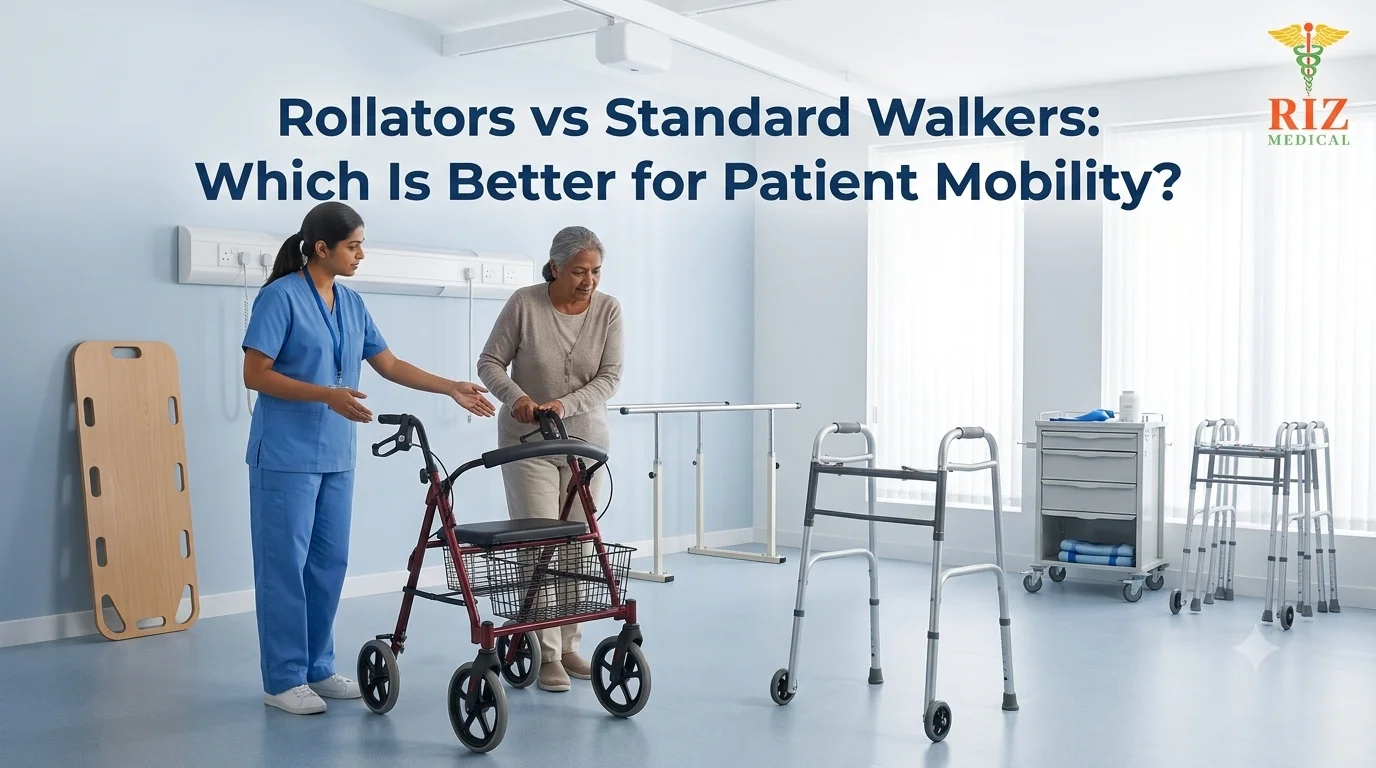
Choosing the right walking aid can make a significant difference in patient mobility, balance, confidence, and everyday independence. Rollators vs Standard Walkers: Which Is Better for Patient Mobility? is an important consideration for healthcare facilities, rehabilitation centres, nursing homes, and home healthcare settings when selecting appropriate walking support for patients. Both standard walkers and rollators provide support while walking, but they are designed with different features and mobility needs in mind.
A standard walker generally provides a stable frame that the user lifts or moves forward before taking the next step. A rollator, in contrast, normally has wheels and hand-operated brakes, allowing the user to move it continuously while walking. Some rollators also include a built-in seat for rest periods. Understanding these differences requires looking beyond the basic appearance of each device. Factors such as balance, strength, walking ability, braking control, environment, patient safety, and frequency of use can all affect which option is appropriate.
What Is the Difference Between a Rollator and a Standard Walker?
The main difference between a rollator and a standard walker is how each device supports movement. A standard walker usually has four legs and provides a stable base that the user lifts or moves forward step by step. A rollator generally has three or four wheels, allowing it to move continuously as the user walks. Rollators commonly include hand-operated brakes and may also have a seat for resting.
Standard walkers are often used when controlled and stable movement is a priority, while rollators can provide greater manoeuvrability for users who can safely manage a wheeled device. The choice depends on factors such as balance, strength, coordination, endurance, and the intended environment. Healthcare professionals should assess the patient’s functional abilities before recommending a particular walking aid. Proper fitting and user training are also important for safe use.
Key Differences Between Rollators and Standard Walkers
- Wheels: Standard walkers generally have no wheels, while rollators typically have three or four wheels for continuous movement.
- Stability: A standard walker can provide a stable base, whereas a rollator requires the user to control its rolling movement.
- Movement: Standard walkers are moved forward step by step, while rollators can be pushed continuously during walking.
- Brakes: Rollators commonly have hand-operated brakes, while basic standard walkers generally do not require braking systems.
- Seating: Many rollators include a built-in seat for resting, whereas standard walkers typically do not provide this feature.
- Best Use: Standard walkers may suit users needing controlled support, while rollators may suit users who can safely manage wheeled mobility.
Which Patients Should Use a Rollator for Walking Support?
A rollator can be appropriate for patients who require walking assistance but have enough balance, coordination, and upper-body control to manage a wheeled mobility aid safely. It may be useful for individuals who experience reduced endurance, mild balance difficulties, weakness, or fatigue during longer periods of walking. One important benefit is that many rollators allow users to maintain a more continuous walking rhythm. Instead of repeatedly lifting a frame, the patient can push the device forward while walking.
A seat can also provide a convenient resting point for individuals who become tired during longer journeys, although the brakes should be properly engaged before sitting. In the comparison of Rollators vs Standard Walkers: Which Is Better for Patient Mobility?, a rollator may therefore be considered when mobility and endurance are important priorities. Patients recovering from certain conditions or undergoing rehabilitation may find rolling movement easier than repeatedly lifting a traditional walker.
However, a rollator is not automatically suitable for every patient who needs walking assistance. Patients with poor balance, reduced coordination, difficulty operating hand brakes, or a tendency to lean heavily on the device may require another type of walking aid. A physiotherapist or other qualified healthcare professional can assess gait, strength, balance, and functional needs before recommending a device.
When Is a Standard Walker Better for Patient Stability?
A standard walker can provide a high level of stability because its frame creates a broad and relatively fixed base of support. Since the device does not roll freely, the patient generally has greater control over how and when it moves. This can be particularly useful for people who need substantial assistance with balance. Patients with significant weakness or reduced stability may find a standard walker easier to control when appropriately fitted and taught.
The user can move the frame forward, place it securely on the floor, and then step into the supported area. This slower movement pattern can help some individuals feel more secure during rehabilitation or daily activities. When examining Rollators vs Standard Walkers: Which Is Better for Patient Mobility?, stability should not be considered separately from the patient’s physical capabilities. A device that is technically stable may still be difficult to use if the patient cannot lift or advance it.
Conversely, a wheeled device may be inappropriate if the patient cannot control its movement. Standard walkers can also be useful when the primary objective is controlled, short-distance movement rather than speed. They are commonly considered in situations where the patient needs a stable support structure during transfers and walking. Proper height adjustment and professional instruction remain important for safe and effective use.
How Do Rollators and Standard Walkers Compare for Safety?
Safety depends on how well a walking aid matches the patient’s physical abilities and how correctly it is used. Standard walkers can provide a stable base because they do not roll freely, while rollators allow smoother movement through their wheels and braking systems. However, each device has different safety considerations that should be evaluated before use.
With a standard walker, patients need sufficient strength and coordination to lift or reposition the frame safely. With a rollator, users must be able to control the device and operate the hand brakes correctly. Healthcare professionals should also consider the patient’s balance, gait, hand function, environment, and ability to follow instructions when selecting a suitable walking aid.
Important Safety Factors to Consider
- Patient Balance: Assess whether the patient can maintain balance while moving and turning with the selected walking aid.
- Brake Control: Rollator users should be able to operate the hand brakes and engage the locking mechanism before sitting.
- Frame Stability: Check that the walker remains stable on the floor and does not have damaged or loose components.
- Proper Adjustment: Set the handle height correctly to support comfortable posture and controlled movement during walking.
- Surface Conditions: Consider wet floors, loose rugs, uneven surfaces, ramps, and other obstacles that may affect safe mobility.
- Regular Inspection: Healthcare facilities should routinely check wheels, brakes, grips, frames, and other components for wear or damage.
Are Rollators Easier to Use Than Standard Walkers for Daily Mobility?
Ease of use depends heavily on the individual. A rollator can feel easier for a patient who has adequate balance and wants to walk continuously without repeatedly lifting a frame. Its wheels can reduce the effort needed to move the device, particularly when travelling longer distances. A standard walker may be easier for someone who needs a firm support structure and prefers slower, more deliberate movement. Although it requires more effort to reposition, its stable base can make the walking process more controlled for certain users.
In evaluating Rollators vs Standard Walkers: Which Is Better for Patient Mobility?, daily activities should be considered carefully. A patient who frequently walks through corridors, attends appointments, or needs to cover longer distances may value the maneuverability of a rollator. A patient who mainly walks short distances inside a room may have different requirements.
The patient’s confidence is another consideration. A device that looks convenient may not be appropriate if the user feels uncomfortable controlling it. Healthcare professionals should observe how the patient stands, walks, turns, stops, sits, and negotiates obstacles before deciding which mobility aid provides practical support.
Which Features Should Healthcare Facilities Check Before Buying?
Healthcare facilities should evaluate walking aids based on patient requirements, expected usage, durability, and the environment where the equipment will be used. The purchase decision should consider more than the initial cost, as equipment quality, maintenance needs, and user safety can affect long-term value. Facilities may need different models depending on whether the equipment is intended for hospitals, rehabilitation centres, nursing homes, or home healthcare programmes.
Before purchasing rollators or standard walkers, procurement teams should compare specifications from reliable manufacturers and consider the needs of their patient population. Factors such as weight capacity, adjustability, frame construction, braking systems, wheel design, and maintenance requirements can influence usability and safety. Staff should also check whether replacement parts and technical support are readily available.
Key Features to Check Before Procurement
- Weight Capacity: Verify the manufacturer’s stated weight capacity to ensure the equipment can safely support the intended patient population.
- Frame Construction: Choose durable frames designed to withstand regular use while remaining manageable for patients and healthcare staff.
- Height Adjustment: Adjustable handles allow staff to custmanomise the walking aid according to the user’s height and posture.
- Braking System: For rollators, check that hand brakes are easy to operate and that the locking mechanism functions reliably.
- Wheel Design: Consider wheel size, material, and durability based on whether the equipment will be used indoors, outdoors, or on varied surfaces.
- Maintenance Needs: Assess cleaning requirements, inspection procedures, replacement parts, warranty coverage, and supplier support before purchasing.
Can a Rollator Improve Mobility and Independence Compared With a Standard Walker?
A rollator can support greater mobility for suitable users because its wheels allow continuous forward movement. The design may make it easier to walk longer distances and change direction without repeatedly lifting the frame. For some patients, this can support greater participation in everyday activities. The built-in seat available on many rollator models can also be useful for individuals who experience fatigue.
A person may be able to stop, engage the brakes, rest, and continue walking when ready. This feature can be particularly practical during longer outings, although it does not replace appropriate clinical assessment. The question of Rollators vs Standard Walkers: Which Is Better for Patient Mobility? therefore depends on what mobility means for the individual patient. If stability and controlled movement are the primary requirements, a standard walker may be considered.
If continuous walking, maneuverability, and rest options are more important and the patient can safely control a wheeled aid, a rollator may be considered. Independence should not simply mean allowing a patient to move without assistance. It should mean providing an appropriate mobility solution that supports safe participation in daily activities. Proper training, correct fitting, regular monitoring, and reassessment are important when a patient’s strength or mobility changes.
How Should Healthcare Facilities Choose Between Rollators and Standard Walkers?
Healthcare facilities should select a walking aid according to the patient’s functional abilities, safety requirements, environment, and intended activities. Factors such as balance, gait, strength, endurance, coordination, hand function, and the ability to follow instructions can affect whether a rollator or standard walker is appropriate. A professional assessment can help identify the level of support required and reduce the risk of selecting an unsuitable device.
The intended setting should also be considered during procurement. Hospitals, rehabilitation centres, nursing homes, and home healthcare programmes may have different mobility requirements and environmental conditions. Facilities should also consider equipment durability, weight capacity, adjustability, maintenance, storage, and staff training to support safe and consistent use.
Key Factors to Consider When Selecting a Walking Aid
- Assess Mobility: Observe how independently the patient can stand, walk, turn, and stop before selecting a suitable walking aid.
- Evaluate Balance: Consider whether the patient can maintain stability while moving the device and navigating everyday surroundings.
- Check Strength: Determine whether the patient can safely lift and reposition a standard walker or control a wheeled device.
- Review Hand Function: Ensure the patient has sufficient grip and coordination to operate rollator brakes when a wheeled aid is selected.
- Consider the Environment: Assess corridors, flooring, ramps, doorways, outdoor paths, and other conditions where the walking aid will be used.
- Plan Reassessment: Mobility needs can change during recovery or long-term care, so facilities should periodically review whether the selected device remains appropriate.
Conclusion
Understanding Rollators vs Standard Walkers: Which Is Better for Patient Mobility? requires a patient-centered approach rather than selecting equipment based solely on features. Standard walkers generally focus on stable, controlled support, while rollators provide wheeled mobility, maneuverability, and, in many models, a convenient resting seat. For healthcare facilities, the right mobility aid should be selected according to the patient’s functional ability, safety requirements, environment, and intended use.
Regular inspection, correct adjustment, patient education, and professional assessment are equally important parts of mobility equipment management. When the differences between rollators and standard walkers are understood, healthcare teams can make more informed equipment decisions. The objective should be to provide appropriate support while helping patients move as safely and independently as their individual abilities allow.
Explore Our Recent Blogs
- Medical Equipment for Rehabilitation Centers
- How Government Healthcare Programs Procure Wheelchairs and Mobility Equipment
- Manual vs Power Wheelchairs
- Hospital Wheelchair Procurement Guide for Healthcare Facilities
- Patient Lifts for Healthcare Facilities: Types, Uses, and Selection Factors
Frequently Asked Questions
1. What is the main difference between a rollator and a standard walker?
A standard walker generally provides a stable frame that the user moves forward manually. A rollator normally has wheels and hand brakes, allowing continuous movement with less lifting. Some rollators also include a seat and storage compartment.
2. Is a rollator safer than a standard walker?
Neither device is automatically safer for every patient. Safety depends on the individual’s balance, strength, coordination, environment, and ability to use the equipment correctly. A healthcare professional should assess the patient’s mobility needs before selecting a walking aid.
3. Who should use a standard walker?
A standard walker may be appropriate for patients who need a stable support structure while walking. It can be useful for individuals who have significant balance concerns but can safely reposition the frame. Proper fitting and instruction are important for effective use.
4. Who can benefit from a rollator?
A rollator may benefit patients who need walking support but can safely control a wheeled device. It can be useful for individuals who experience fatigue or need to walk longer distances. Models with seats can provide a convenient resting option when used correctly.
5. Can a rollator be used outdoors?
Some rollators are designed for outdoor use, but suitability depends on the model, wheel construction, surface conditions, and patient ability. Uneven ground, slopes, wet surfaces, and obstacles can affect safe operation. Users should follow the manufacturer’s instructions and receive appropriate training.
6. How should healthcare facilities select the right walking aid?
Facilities should assess patient balance, strength, gait, coordination, hand function, endurance, and intended environment. They should also consider equipment durability, weight capacity, adjustability, braking systems, maintenance, and staff training. A professional clinical assessment can help determine the most appropriate option for an individual patient.


