
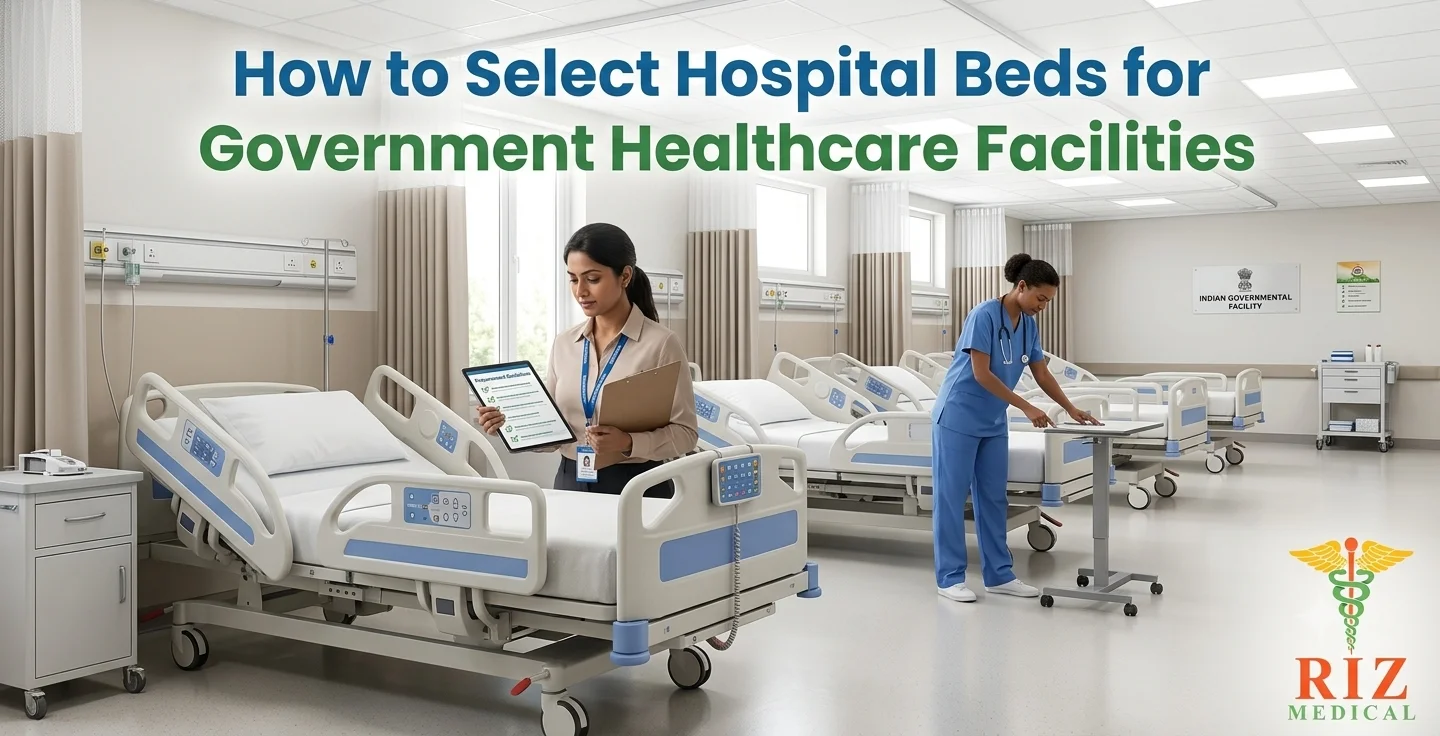
Government healthcare facilities serve large and numerous affected male and female populations, choosing clinic beds an important procurement decision. Beds should support patient safety, comfort, clinical needs, contamination control, and the sustainable use of public healthcare resources. How to Select Hospital Beds for Government Healthcare Facilities consequently calls for a holistic approach that considers both immediate medical needs and long-term operational necessities.
Unlike individual purchases, government healthcare procurement frequently entails large volumes, defined technical specifications, financial limitations, regulatory requirements, and standardisation across multiple centres. An appropriate hospital mattress has to provide dependable overall performance whilst being cost-effective for nurses, caregivers, safety groups, and patients. The selection system has to, moreover, keep in mind durability, spare parts availability, warranty support, and ease of use.
What Types of Hospital Beds Are Suitable for Government Healthcare Facilities?
Government healthcare facilities might also require different kinds of hospital beds depending on patient needs, facility features, available infrastructure, and procurement budgets. Common options include manual, semi-electric, fully electric, ICU, bariatric, and pediatric beds. Each kind offers tremendous positioning features, weight capacities, mobility skills, and degrees of adjustment. Selecting the proper kind depends initially on how and where the beds may be used.
General wards can also require long-lasting and easy-to-maintain beds for routine patient care, while intensive care units can also require specialized beds with superior positioning and safety features. Electric models can be a useful resource for common patient adjustments, whereas manual models can be appropriate when basic functions are sufficient. Facilities also need to consider cleaning requirements, protection aid, spare-parts availability, and long-term operating conditions. Matching the mattress type to the intended software program can help avoid unsuitable purchases.
Common Hospital Bed Types to Consider
- Manual health facility beds: Use hand-operated mechanisms and may be appropriate for facilities requiring clean positioning skills and less difficult safety.
- Semi-electric beds: Combine powered and manual modifications, providing some electric-powered positioning while preserving manual functions.
- Fully electric powered beds: Allow personnel to control multiple positioning functions electronically, which can be beneficial for common patient modifications.
- ICU beds: Designed for critical-care environments and may consist of advanced positioning, safety features, and support for medical equipment.
- Bariatric beds: Provide higher weight capacities and wider structures for sufferers who require greater space and structural support.
- Paediatric beds: Designed with features and dimensions appropriate for younger patients, with suitable safety features for their care environment.
How Should Government Hospitals Determine the Right Bed Features?
Government hospitals ought to choose mattress competencies based totally on affected character desires, department requirements, employee workflows, and frequency of use. Important features can also include top adjustment, backrest positioning, knee-rest adjustment, side rails, casters, brakes, and appropriate weight capacity. The bed needs to provide the capabilities needed for safe and effective care of a man or woman. Facilities must avoid unnecessary features that inflate costs without adding sensible value.
The required features can range among well-known wards, emergency departments, intensive care units, and specialized care areas. Procurement groups must additionally consider ease of cleaning, sturdiness, mobility, maintenance, and compatibility with the gift device. A practical assessment of everyday medical institution operations can assist in picking out the most useful features. This method supports better purchasing decisions while keeping long-term operational goals in mind.
Key Features to Consider
- Height adjustment: Allows caregivers to put the mattress at an appropriate height for affected individuals’ care and transfers.
- Backrest adjustment: Supports snug patient positioning for the duration of treatment, feeding, exam, and restoration.
- Side rails: Help provide more safety and guidance for sufferers who also may have restricted mobility.
- Castors and brakes: Make it less complicated to transport the mattress at the same time as permitting employees to stabilize it very well at the same time as desk use.
- Weight capacity: Should suit the expected affected individual population and the producer’s particular safe load capacity.
- Easy-to-clean format: Smooth, reachable surfaces can simplify routine cleaning and support infection-control practices.
What Safety Standards Should Be Checked Before Purchasing Hospital Beds?
Government healthcare facilities ought to test applicable clinical bed safety requirements, technical specs, certifications, and check documentation before making a purchase. Important areas include structural stability, safe working load, caster overall performance, braking systems, and side-rail safety. Electric beds should additionally be assessed for electrical safety and reliable control functions. These exams help confirm that the chosen beds are suitable for their intended scientific surroundings.
Procurement groups must request technical datasheets, take a look at reviews, certificates, user manuals, and guarantee documents from suppliers. Where viable, sensible demonstrations or pre-shipping inspections can help affirm the mattress’s real standard overall performance. Staff ought to check whether or not controls are smooth to operate and whether positioning mechanisms work without problems. A thorough safety evaluation can help lessen operational dangers and guide dependable long-term use.
Key Safety Standards and Checks
- Structural stability: Check whether or not the clinic mattress has a strong and stable body designed for regular institutional use.
- Safe load capacity: Verify that the specified weight capacity is suitable for the intended affected person population and usage.
- Braking tool: Ensure the castors and brakes are securely fixed to prevent unwanted bed movement at any point of care for the affected person.
- Side-rail safety: Check that side rails are regular, easy to operate, and as designed for the intended user.
- Electrical protection: For electric-powered beds, affirm electrical components, controls, cables, and adjustment systems meet relevant requirements.
- Product documentation: Review certifications, test reviews, technical specs, manuals, and warranty documents before approval.
How Can Government Healthcare Facilities Balance Quality and Procurement Costs?
Government healthcare facilities need to keep in mind every product’s longevity and the overall cost of ownership at the same time as purchasing healthcare facility beds. The lowest initial price may not always be the most practical option if the product requires regular maintenance or an early replacement. Procurement agencies must check durability, key features, warranty, installation requirements, and expected supplier availability. This technique can assist centers in using public healthcare budgets more effectively.
Bulk purchases additionally require cautious assessment of unit charges, shipping prices, installation necessities, spare-parts availability, and after-sales service. Facilities ought to separate crucial skills from optionally available functions to avoid purchasing unnecessary specifications. Comparing providers against clearly defined technical and financial standards can assist a balanced procurement decision. The final desire should meet clinical requirements at the identical time as the final practical for the to-be-had budget.
Key Factors for Balancing Quality and Cost
- Total fee of ownership: Consider purchase price, safety, maintenance, spare parts, and replacement costs over the tool’s expected lifespan.
- Essential functions: Prioritise capabilities that right away help affected individual care, safety, and workforce necessities in preference to needless additions.
- Durability: Choose beds made for not unusual institutional use to lessen avoidable maintenance and premature replacement.
- Warranty insurance: Review the guarantee period and the specific components and offerings protected by the company.
- Bulk pricing: Compare quantity-based total pricing and associated transport or setup costs at the same time as shopping for a couple of clinic beds.
- After-sales guide: Check provider availability, reaction preparations, technical assistance, and spare-parts supply before finalising the purchase.
Which Hospital Bed Materials and Designs Are Best for Long-Term Institutional Use?
Government healthcare centers need hospital beds that can withstand frequent use by affected individuals, regular cleaning, movement, and repeated modifications. Materials that incorporate metal, stainless steel, aluminum, and durable engineered additives may be used, depending on the mattress design and intended use. The frame wants to offer sufficient strength and stability, whilst the surface stop ought to withstand routine cleansing methods. Procurement teams want to study traditional construction options in place of choosing a mattress based totally on its material.
The format needs to additionally help inexperienced groups of workers and routine maintenance. Features such as reliable castors, stable brakes, practical rails, accessible controls, and smooth adjustment mechanisms can improve everyday usability. Beds used in busy wards may additionally experience greater wear, making durability and safety simplicity particularly important. Selecting a suitable combination of materials and layout can ensure dependable long-term institutional use.
Key Design and Material Factors
- Strong bed frame: Choose a sturdy frame that can resist everyday wear and tear, movement, and repeated daily use.
- Durable floor quilt: The end wants to face up to habitual cleaning and help maintain the mattress’s condition in a healthcare environment.
- Quality shifting additives: Check joints, adjustment mechanisms, castors, and exceptional components for clean and reliable operation.
- Easy-to-use layout: Choose surfaces and features that allow staff to move the mattress efficiently.
- Secure trouble rails: Side rails should be strong, smooth to operate, and appropriate for the intended patient or caregiver environment.
- Practical mobility: Reliable castors and powerful brakes ought to make beds much less difficult to move while keeping them stable when required.
How Should Procurement Teams Evaluate Hospital Bed Suppliers?
Procurement teams have to study hospital bed suppliers based on product quality, technical compliance, manufacturing capability, documentation, delivery capability, and after-sales support. Suppliers must be able to meet the specified specifications and offer the preferred quantity within the agreed timeframe. Their technical submissions need to be carefully compared with the broader procurement requirements. This enables you to make certain that the selected supplier can support the organization’s operational needs.
The evaluation should moreover cover warranty terms, maintenance offerings, spare-parts availability, and technical support. For large-volume orders, consistent product quality throughout the life cycle is especially vital for staff training and protection. Where legal, procurement organizations can conduct product demonstrations, sample inspections, or technical evaluations in advance rather than as a last resort. A supplier evaluation based on these factors can help reduce procurement risks and support dependable long-term tool use.
Key Factors to Evaluate Hospital Bed Suppliers
- Technical compliance: Check whether or not the company’s clinic beds meet all required specifications, competencies, and regular typical overall performance requirements.
- Manufacturing ability: Confirm that the dealer can produce and deliver the required quantity within the required procurement timeline.
- Product documentation: Review technical datasheets, certificates, check critiques, individual manuals, and one-of-a-kind required documentation.
- Warranty terms: Examine the assurance period, insurance, company policies, and the issuer’s approach to managing product troubles.
- Spare-parts availability: Ensure essential substitute elements may be obtained at the same time as preservation or recurring upkeep is required.
- After-sales service: Evaluate technical manuals, maintenance support, provider response arrangements, and general company guidance.
What Should Government Facilities Check During Hospital Bed Inspection and Delivery?
Government healthcare facilities have to test out hospital beds carefully while they are being introduced to verify that the furnished merchandise fits the accepted specifications and purchase requirements. The group needs to confirm the quantity, model, dimensions, capabilities, add-ons, and general physical condition of each mattress. Any observed damage, missing components, or production defects need to be recorded before acceptance. This tool helps ensure that the purchased product meets the procurement requirements.
Functional testing ought to additionally be completed before the beds are allotted to big departments. Staff can take a look at the adjustment mechanisms, facet rails, castors, brakes, controls, and electric-powered functions, as relevant. Procurement organizations need to acquire user manuals, assurance documents, protection commands, and relevant certificates from the dealer. A dependent inspection system lets us understand issues early and enables easy deployment.
Key Checks During Inspection and Delivery
- Quantity and model: Confirm that the purchased style of beds and model specifications match the authorized purchase order and specs.
- Physical condition: Inspect frames, surfaces, joints, mattress structures, and add-ons for damage, defects, or missing components.
- Adjustment capabilities: Test top, backrest, leg, and other positioning mechanisms to make certain they operate without problems as supplied.
- Castors and brakes: Check that castors drift properly and brakes engage securely to hold the bed solid whilst required.
- Electrical additives: For electric beds, look at controls, cables, motors, and energy connections for correct operation and visible damage.
- Documentation: Verify that manuals, warranty information, certificates, maintenance instructions, and other required files are provided.
How Can Healthcare Facilities Create a Long-Term Hospital Bed Procurement Plan?
Healthcare centers want to create a long-term hospital bed procurement plan by assessing current bed needs, affected individual needs, departmental requirements, and future growth needs. Procurement businesses ought to keep information on each bed’s age, condition, usage, maintenance records, and location. This information can help pick out machines that call for alternative or persistent safety. Planning earlier also can lessen the threat of surprising shortages and unplanned purchases.
The procurement approach must include safety, employee training, spare-parts availability, and alternative schedules. Facilities can also recall standardising decided-on bed models where appropriate to simplify employee training, servicing, and stock control. Future purchases should be reviewed in opposition to changing medical necessities and budgeted. An installation plan can assist healthcare facilities in managing hospital bed needs over the course of the product’s life.
Key Steps for Long-Term Procurement Planning
- Assess current inventory: Record the variety, kind, age, condition, and region of existing sanatorium beds in each department.
- Forecast future needs: Consider affected person volumes, new departments, facility expansion, and expected adjustments in bed requirements.
- Set opportunity schedules: Identify older or frequently repaired beds and plan their alternative before they turn out to be wrong for use.
- Plan preventive protection: Establish regular inspection and servicing schedules to help secure dependable mattress performance overall.
- Standardise where suitable: Use properly matched bed fashions and specifications where feasible to simplify training, renovation, and spare-parts control.
- Review the procurement budget: Allocate a price range for current beds, maintenance, spare parts, training, and future alternative necessities.
Conclusion
Selecting health center beds for government healthcare facilities requires careful consideration of affected character goals, clinical necessities, safety, sturdiness, upkeep, and procurement expenses. How to Select Hospital Beds for Government Healthcare Facilities consists of evaluating bed types, key features, weight capacity, materials, supplier resources, and the overall value of ownership before making a purchase decision.
A primarily based procurement method can assist government hospitals in choosing beds that support green-affected individual care and long-term institutional use. By combining high-quality specifications, proper inspection, staff training, preventive protection, and a reliable supplier manual, healthcare centers can develop a practical and sustainable hospital bed procurement process.
Explore Our Recent Blogs
- How Government Healthcare Programs Procure Wheelchairs and Mobility Equipment
- Manual vs Power Wheelchairs
- Hospital Wheelchair Procurement Guide for Healthcare Facilities
- Patient Lifts for Healthcare Facilities: Types, Uses, and Selection Factors
- Rollators vs Standard Walkers: Which Is Better for Patient Mobility?
Frequently Asked Questions
1. What factors should government hospitals consider when selecting hospital beds?
Government hospitals should keep in mind the needs of affected people, departmental use, mattress type, protection functions, weight capacity, durability, ease of cleaning, mobility, and adjustment capabilities. They also need to verify warranty, maintenance, spare-parts availability, company support, and overall cost of ownership. These factors help centers pick beds that are probably practical for long-term institutional use.
2. Are electric hospital beds suitable for government healthcare facilities?
Electric clinic beds can be suitable, whilst common patient positioning and adjustment are required. They can offer accessible control of capabilities, which include head, backrest, and leg positioning, depending on the model. However, centers must consider electrical infrastructure, protection requirements, staff training, and procurement budgets before deciding on them.
3. Why is hospital bed weight capacity important?
Hospital mattress weight capacity shows the weight the bed is designed to safely support, consistent with its specifications. Government facilities may also serve patients with precise frame sizes and medical needs, making appropriate capability a critical procurement consideration. The chosen capability needs to accommodate the intended user population and the manufacturer’s stated requirements.
4. What hospital bed features are important for patient safety?
Important protection troubles can encompass stable bases, robust brakes, appropriate casters, appropriate side rails, dependable positioning mechanisms, and sufficient load capacity. For electric-powered beds, electric-powered protection and reliable management systems need to be taken into consideration as well. Facilities should study the equipment’s capabilities in competition with their intended clinical use and relevant procurement requirements.
5. How can government hospitals reduce hospital bed maintenance costs?
Facilities can lessen avoidable protection prices through choosing durable equipment, implementing preventive maintenance schedules, training personnel in proper operation, and ensuring access to authentic spare parts. Warranty insurance and provider support must moreover be evaluated before procurement. Maintaining accurate device records can help identify everyday issues and plan replacements.
6. What should be checked when choosing a hospital bed supplier?
A supplier ought to be evaluated for product quality, ability to meet technical specifications, manufacturing capability, documentation, delivery capability, warranty terms, spare-parts availability, and after-sales support. Government procurement groups need to additionally verify the dealer’s capability to fulfil the specified amount within the agreed time frame. Product demonstrations or inspections can provide additional data in advance of final purchase.


