
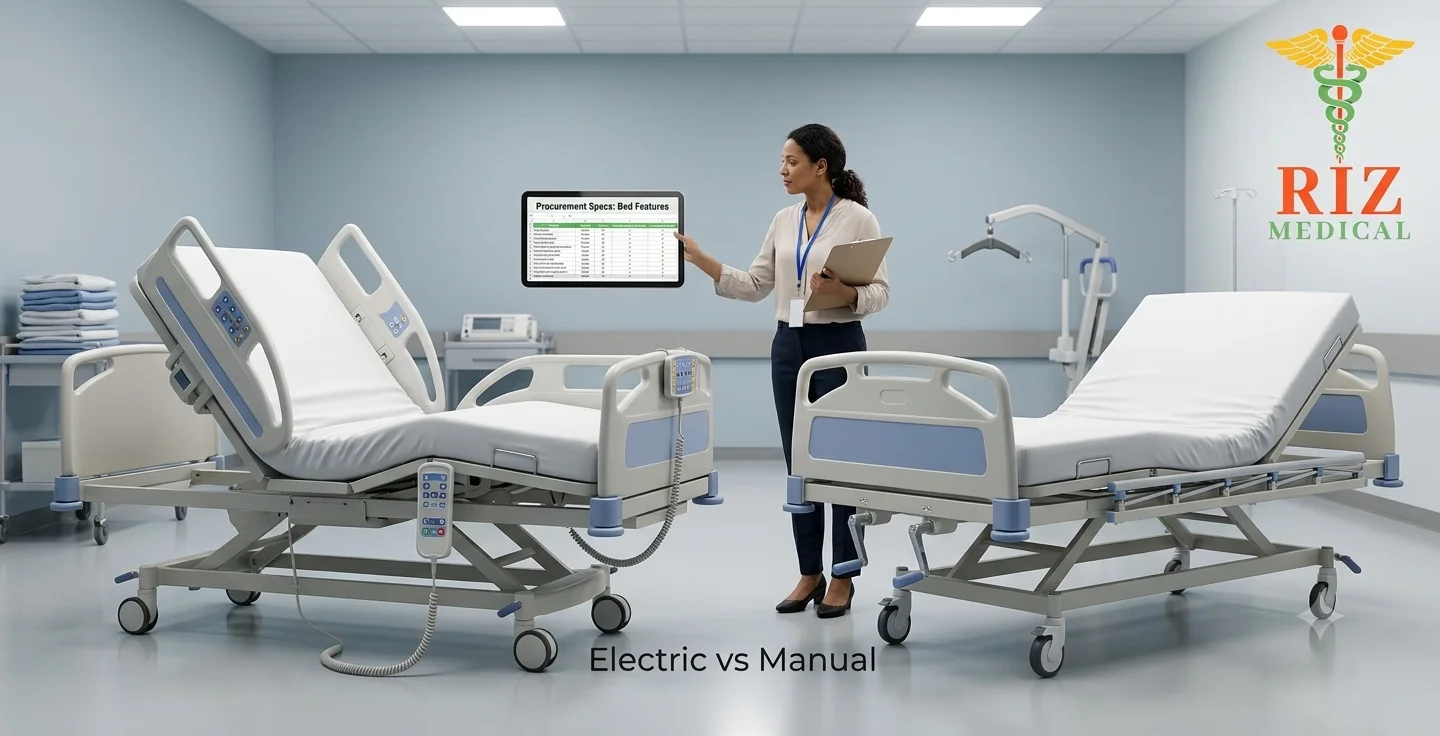
Choosing the right hospital bed is a vital need for hospitals, nursing homes, rehabilitation centres, clinics, and home healthcare companies. Electric vs Manual Hospital Beds: Key Differences for Healthcare Buyers can assist procurement organizations in understanding how each type of bed works, what capabilities they provide, and where each choice is most suitable. The preference is not simply about whether a bed has a motor; it moreover entails patient comfort, caregiver workload, renovation, safety, space, and budget.
When comparing electric-powered vs. manual medical institution beds, healthcare clients ought to keep in mind how regularly the mattress can be adjusted and who will perform it. Manual health facility beds normally rely on hand-operated mechanisms, even as electric-powered hospital beds use motors and controls to regulate specific positions. Understanding those variations can help facilities pick out the tool that allows effective patient care without creating unnecessary operational or safety risks.
What Is the Difference Between Electric and Manual Hospital Beds?
The important distinction between electric-powered and manual beds is the way their adjustable functions are operated. A guide health facility bed generally uses mechanical components, which include hand cranks or levers to adjust the backrest, leg segment, or regular bed top, depending on its design. An electric-powered hospital bed makes use of one or more motors managed through a handset or control panel, permitting precise adjustments with far less physical effort.
When assessing electric-powered vs. manual hospital beds, consumers have to look past the working mechanism. Manual beds can be sensible when changes are infrequent and budgets are limited, while electric-powered beds may be useful when frequent positioning is required. The suitable choice depends on the patient’s mobility, caregiver needs, clinical workflow, and the kind of care being provided.
Key Differences at a Glance
- Operating Mechanism: Manual clinic beds use mechanical adjustment systems, while electric-powered models use powered controls to change selected mattress positions.
- Adjustment Effort: Manual beds may require caregivers to use a crank or other mechanical controls. Electric controls can reduce the physical effort needed for routine adjustments.
- Patient Positioning: Electric models make bed adjustments easier. They can support patient comfort and care. The available positions depend on the bed’s design and features.
- Caregiver Workload: Repeated manual adjustments can require greater physical effort, especially in environments wherein many patients need frequent repositioning.
- Power Requirement: Manual beds do not need electricity for mechanical adjustments. Electric beds need a suitable power supply and working electrical components.
- Purchase and Maintenance: Manual models usually have simpler mechanical designs. Electric models may have more components. These components may need regular inspection, maintenance, and troubleshooting.
How Do Electric and Manual Hospital Beds Work?
Manual hospital beds use mechanical systems to adjust different sections of the bed. Depending on the model, a hand crank can raise or lower the backrest. It can also adjust the leg section or bed height. The caregiver usually makes these adjustments manually. Therefore, the ease of positioning depends on the bed’s design and the effort required. Electric hospital beds use motors for powered adjustments. A wired handset or control panel allows users to operate different functions. These may include backrest elevation, knee positioning, and bed height adjustment. The available functions depend on the specific model.
The precise capabilities differ among models, so healthcare consumers need to check the manufacturer’s specs when choosing, rather than assuming that every electric powered bed offers the same sort of movement. For facilities evaluating electric-powered vs. manual hospital beds, the walking way impacts ordinary workflow. A bed that needs frequent adjustments may benefit from powered controls. A bed that needs fewer adjustments may not need electric features.
Important Operating Considerations
- Manual Controls: Hand cranks and mechanical controls require physical effort. They should be easy for caregivers to reach and use.
- Electric Controls: Handheld controls can permit caregivers or patients to adjust properly matched settings without manually turning a crank.
- Motor Configuration: Some electric hospital beds have multiple motors for more functions. Simpler models may have fewer powered features.
- Emergency Operation: Buyers should check how the bed works during a power outage. They should also check if manual emergency functions are available.
- Control Accessibility: The control gadget needs to be clean and placed correctly for the intended users.
- Manufacturer Specifications: Buyers need to verify weight capacity, adjustment options, motor features, electrical requirements, and safety features before purchasing.
Which Hospital Bed Is Better for Patient Comfort and Positioning?
Patient comfort is endorsed through greater than whether or not or not or now not a clinic mattress is manual or electric powered. Mattress quality, bed dimensions, side rails, patient mobility, positioning requirements, and caregiver practices can all have an impact on comfort. Electric vs. manual hospital beds consequently need to be taken into consideration as part of the overall care environment, rather than as a remote machine selection.
Electric beds could make common positioning less difficult due to the fact that the caregiver can set off supported changes using a manipulator. This may be particularly useful as sufferers require repeated changes to the backrest, leg support, or bed height. Manual beds can also offer beneficial positioning; however, the adjustment process can require extra physical effort and time.
Patient Positioning Factors to Consider
- Backrest Adjustment: A movable backrest can assist in accommodating sitting, resting, feeding, examination, and fantastic everyday care tasks.
- Knee Positioning: Adjustable leg or knee sections can provide more positioning options while supported by using the mattress’s format.
- Height Adjustment: Variable bed height can make transfers and caregiving obligations much less complex when available.
- Patient Independence: Powered controls may additionally permit some users with suitable mobility to make authorised adjustments themselves.
- Caregiver Access: Adjustable positioning can offer greater access at some stage in nursing, examination, cleansing, and transfer activities.
- Mattress Compatibility: The mattress ought to be well suited to the bed frame and suitable for the affected man or woman’s intended care needs.
How Do Electric and Manual Hospital Beds Compare in Cost?
Purchase fee is a crucial consideration when comparing electric-powered vs. manual medical institution beds; however, it should no longer be the only monetary element. A guide hospital bed can also have a lower initial purchase cost because, in truth, its mechanical format no longer requires powered motors and electric controls. For centers searching for many beds, this distinction can have a large effect on the initial tool fee range.
Electric beds normally include more features and can therefore have a higher initial price. However, buyers need to furthermore take into account the operational cost of fewer manual modifications, reduced physical effort, and undoubtedly improved workflow. The economic assessment needs to include purchase fee and setup (where applicable), maintenance, electrical power requirements, operational components, and expected service life.
Cost Factors Healthcare Buyers Should Evaluate
- Initial Purchase Price: Compare the total cost of every model you are considering to evaluate the advertised base charge.
- Maintenance Expenses: Electric fans may also require servicing of motors, controls, cables, and unique electrical components.
- Replacement Parts: Check whether or not crucial components are available without hassle and whether the provider offers after-sales assistance.
- Operational Efficiency: Consider whether or not quicker or much less difficult modifications could lessen caregiver effort at some unspecified time in the future of everyday use.
- Expected Service Life: A durable bed that remains sensible for many years may additionally offer a better extended-term fee than a less high-priced version requiring common alternative.
- Bulk Procurement: Hospitals and healthcare businesses want to ask providers about institutional pricing, warranties, issuer agreements, and alternative-element availability.
Are Electric Hospital Beds Easier for Caregivers to Use?
For many routine adjustment tasks, electric sanatorium beds can reduce the physical effort required from caregivers. Instead of manually turning a crank, the operator can use the mattress’s control tool to activate well-matched capabilities. This may be useful in centers wherein beds are adjusted often within the course of the day.
Manual beds can no matter the truth that be honest to perform, especially at the same time as the adjustment mechanism is nicely designed and properly maintained. Their less hard operation additionally can be valuable in settings wherein energy is unreliable or in which powered abilities aren’t crucial. The comparison between electric-powered and manual medical institution beds should therefore account for the depth and frequency of everyday bed changes.
Caregiver Usability Considerations
- Reduced Physical Effort: Electric controls can minimise the repetitive bodily strain associated with regular mattress changes.
- Faster Positioning: Powered mechanisms should make everyday adjustments quicker, depending on the mattress and motor configuration.
- Ergonomic Benefits: Easier top and positioning changes can also be a useful resource for extra snug working practices for caregivers.
- Training Requirements: Staff should receive adequate training on operating the controls and using safety features effectively.
- Manual Simplicity: Manual beds can also have fewer moving parts and may be familiar to staff in many healthcare environments.
- Workflow Compatibility: Buyers must determine how the bed fits into actual ward workflow routines, depending on product specs.
What Safety Features Should Buyers Check in Hospital Beds?
Safety wants to remain a crucial consideration at the same time as comparing electric-powered vs. manual hospital beds. Buyers want to confirm features, including side rails, locking casters, steady going for walk loads, bed compatibility, body stability, and emergency features. Electric models additionally require attention to electric-powered components, control systems, wiring, and safety in the direction of the user.
Manual beds have fewer electric-powered additives, but they nevertheless require regular inspection. Mechanical additives, wheels, brakes, cranks, fasteners, and adjustment systems ought to continue to be useful. Regardless of the lifting mechanism, healthcare centers need to set up suitable inspection and upkeep tactics primarily based on the manufacturer’s recommendations.
Essential Hospital Bed Safety Checks
- Safe Working Load: Confirm that the bed can safely support the intended patient’s weight and any extra device positioned on it.
- Locking Casters: Wheels must provide dependable movement as required and strong locking while the bed is to remain stationary.
- Side Rails: Check whether or not or now not or no longer rails are suitable for the intended affected person population and use them in line with facility techniques.
- Electrical Safety: Electric beds must have suitable electrical safety, intact cables, and properly functioning controls.
- Mechanical Stability: Manual and electric beds must remain strong for an unspecified period in the future for adjustment, transfers, and routine patient care.
- Emergency Functions: Ensure emergency reducing or manual override capabilities are available and that personnel understand how they function.
How Do Maintenance Requirements Differ Between Electric and Manual Beds?
Maintenance is another crucial area when comparing electric-powered vs. manual sanatorium beds. Manual beds normally rely upon mechanical components; because of this, safety focuses on shifting additives, cranks, casters, brakes, joints, fasteners, and body condition. Regular inspection can help recognize issues earlier than they impact everyday operation.
Electric sanatorium beds require mechanical inspection similarly to interest in electric additives. Motors, handset controls, cables, connectors, and power-related components should be checked regularly according to the manufacturer’s guidelines. Facilities need to have a clear approach for removing faulty equipment from service until it’s been inspected or repaired.
Maintenance Priorities for Healthcare Facilities
- Routine Inspection: Establish regular tests for the body, shifting sections, wheels, brakes, element rails, and adjustment mechanisms.
- Motor Inspection: Electric beds must have their motors and powered mechanisms inspected at the same time as routine maintenance, as per company schedules.
- Control Checks: Handsets and control panels must be checked to ensure they operate effectively, without broken buttons, loose connections, or other visible defects.
- Mechanical Lubrication: Applicable mechanical additives need to be maintained in step with the producer’s instructions in preference to using incorrect lubricants.
- Cleaning Procedures: Beds must be wiped smooth using materials and techniques appropriate to the manufacturer’s instructions and contamination-management necessities.
- Service Support: Choose agencies that can provide technical aid, spare parts, warranty help, and renovation services as required.
Which Hospital Bed Should Healthcare Facilities Choose?
There is no single answer for each healthcare facility when evaluating electric-powered vs. guide health center beds. The appropriate choice depends on the patient’s needs, staff workload, frequency of adjustments, facility infrastructure, budget range, safety features, and the intended care environment. Buyers need to first define their requirements and then evaluate appropriate models closer to those criteria.
Manual beds can also suit facilities looking for simple mechanical operation, lower initial investment, or a device that does not rely on electric power for regular adjustment. Electric beds might also suit environments in which common positioning and reduced caregiver strain are essential concerns. A cautious procurement approach can save you from buying functions you do not need or selecting a tool that doesn’t meet operational requirements.
Procurement Questions to Ask
- Who Will Use the Bed? Identify whether or not the primary customers are probably hospital nurses, caregivers, patients, rehabilitation employees, or home care attendants.
- How Frequently Will It Be Adjusted? Frequent positioning could make powered adjustment more applicable, even as occasional positioning can be efficaciously supported through a guide mechanism.
- What Functions Are Essential? Define whether or not top, backrest, knee, Trendelenburg, or one of a type competencies are genuinely required for the intended utility.
- What Is the Available Budget? Consider each initial procurement cost and extended-term fees together with protection, renovation, opportunity elements, and company.
- Is Electrical Power Reliable? Facilities considering electric-powered beds need to examine their power infrastructure and understand how beds can be controlled during outages.
- What Support Does the Supplier Offer? Check guarantee phrases, installation help, technical help, spare parts, servicing, and response times before placing an order.
Electric vs Manual Hospital Beds: Which Factors Matter Most for Healthcare Buyers?
The best way to compare electric-powered vs. manual clinic beds is to focus on actual healthcare needs. Procurement teams should consider clinical use and patient mobility. They should also assess caregiver workload and how often the bed needs adjustment. Safety is another important factor. Teams should check the available infrastructure and cleaning requirements. Maintenance resources should also be considered. Finally, they should evaluate the total cost of ownership. This approach helps healthcare facilities make a practical purchasing decision.
Healthcare purchasers also want to take into account standardisation. If a facility operates a couple of wards, having regular bed controls and turning techniques can simplify employee education and safety. At the same time, specialized departments may also require precise specs based on affected individual needs and clinical needs.
Final Buyer Checklist
- Patient Requirements: Identify mobility, positioning, comfort, weight, and transfer requirements before selecting the mattress.
- Caregiver Requirements: Assess how a caregiver physically spends time on bed adjustments and whether powered operation ought to assist their workflow.
- Clinical Environment: Consider whether the beds can be utilized in cutting-edge wards, in-depth care environments, rehabilitation regions, clinics, nursing homes, or home care.
- Facility Infrastructure: Check room dimensions, electrical access, floors, storage requirements, and movement pathways.
- Safety Requirements: Verify secure running load, brakes, rails, balance, bed compatibility, and applicable protection issues.
- Total Ownership Cost: Compare acquisition, protection, upkeep, spare parts, provider, and anticipated benefits in advance of making the final procurement choice.
Conclusion
Understanding Electric vs Manual Hospital Beds: Key Differences for Healthcare Buyers are crucial when deciding on a system for hospitals, nursing homes, rehabilitation centres, clinics, and domestic healthcare environments. Manual health center beds can provide dependable mechanical operation, on the same time as electric powered health facility beds can provide accessible powered positioning and possibly lessen physical attempt throughout repeated changes.
The selection need to be primarily based totally on affected man or woman goals, caregiver workflow, safety, capability, infrastructure, safety, and tremendous ownership price. Rather than deciding on a mattress absolutely because of the reality it’s manual or electric powered, healthcare consumers need to compare specific models and decide which capabilities are in fact vital for their intended software.
A structured procurement method can make the assessment between electric-powered vs manual clinic beds more sensible and apparent. By evaluating specs, dealer support, warranty terms, safety requirements, and regular usability, healthcare facilities can pick out medical institution beds that align with their operational and care requirements.
Explore Our Recent Blogs
- Manual vs Power Wheelchairs
- Hospital Wheelchair Procurement Guide for Healthcare Facilities
- Patient Lifts for Healthcare Facilities: Types, Uses, and Selection Factors
- Rollators vs Standard Walkers: Which Is Better for Patient Mobility?
- How to Select Hospital Beds for Government Healthcare Facilities
Frequently Asked Questions
1. Are electric hospital beds better than manual hospital beds?
Electric and manual medical institution beds serve one in every of a type operational requirements. Electric models can simplify common powered modifications, while manual models can offer simple mechanical operation without relying on electricity. The appropriate preference is based on the affected person’s needs, caregiver workload, facility requirements, and budget.
2. What are the main advantages of an electric hospital bed?
Electric hospital beds can offer powered adjustment of supported sections, which also can lessen physical try during habitual positioning. Depending on the model, clients can be able to regulate the backrest, knee section, or bed incline through a handset or control panel. The real abilities usually need to be checked in line with the producer’s specs.
3. Are manual hospital beds suitable for hospitals?
Yes, manual health center beds may be appropriate for healthcare environments wherein their competencies meet affected individual and caregiver necessities. They can be useful in cases where frequent powered adjustment isn’t always essential or wherein facilities decide against robotically operated equipment. Buyers want to despite the fact that they investigate sturdiness, steady working load, positioning alternatives, and upkeep requirements.
4. Do electric hospital beds work during a power failure?
The reaction to a power failure is primarily based on the specific electric-powered healthcare facility bed and its available backup or emergency features. Some models can also encompass battery backup or manual emergency mechanisms, whilst others may additionally require opportunity procedures. Healthcare centers have to verify the producer’s instructions before procurement.
5. What should I check before buying a hospital bed?
Healthcare shoppers need to evaluate patient ability, mattress dimensions, adjustment abilities, protection functions, bed compatibility, caster and brake layout, renovation requirements, guarantee insurance, and supplier help. They also need to consider the environment in which the mattress may be used and how frequently adjustments may be required. A whole specification evaluation can help save you incorrect purchases.
6. How do electric and manual hospital beds affect caregiver workload?
Manual beds can also require more physical effort, whilst caregivers often operate mechanical controls. Electric beds can lessen the attempt required for properly matched powered changes and might support smoother ordinary positioning. The actual impact is based on the bed layout, frequency of use, personnel education, and the care surroundings.


